The Accumulating Liability of Unstructured Licensing History: Confronting Rights Metadata Debt with ISO 21000-6
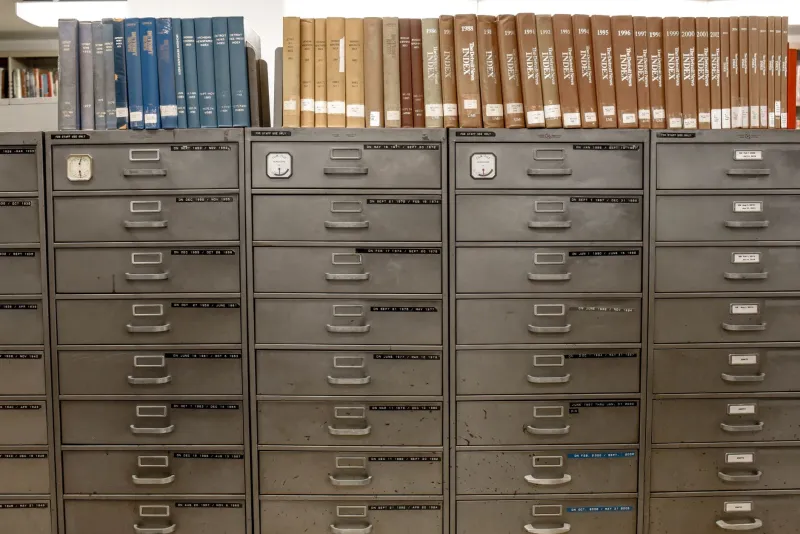
For many US media and publishing companies, the most dangerous assets in the catalog are not the titles with uncertain rights status — they are the titles whose rights status appears certain but is recorded in formats that no modern system can reliably interpret. Decades of licensing agreements, territorial grants, format-specific permissions, and term-limited exclusivities have been captured in PDFs, spreadsheets, scanned paper contracts, and proprietary database fields that resist interoperability at every level. The result is what practitioners are increasingly calling rights metadata debt: an accumulated structural liability that compounds with each new monetization opportunity a company attempts to pursue.
Understanding this liability in precise terms — and recognizing that ISO 21000-6's Rights Data Dictionary provides a concrete remediation framework — is essential for any organization that manages a content catalog of meaningful scale.
Defining Rights Metadata Debt
The term draws an intentional analogy to technical debt, the concept familiar to software engineers describing the long-term cost of expedient architectural shortcuts. Rights metadata debt operates on a similar logic. Each time a licensing agreement was recorded in a non-standardized format, each time territorial rights were described in natural language rather than machine-readable identifiers, and each time a rights transfer was documented in an organizational silo disconnected from the master catalog, a small liability was incurred. Individually, these decisions were often rational responses to the technology and business conditions of their era. Collectively, they constitute a structural deficit that grows more expensive to carry as the number of distribution windows, platform types, and licensing arrangements multiplies.
The practical manifestations of this debt are familiar to anyone who has worked in rights administration at a US studio, publisher, or distributor. Clearance workflows that should take hours extend to weeks because rights researchers must manually reconcile inconsistent historical records. Royalty disputes arise not from bad-faith disagreements but from genuinely ambiguous source data that different parties interpret differently. Catalog acquisitions are priced at a discount because acquirers cannot efficiently verify the rights status of individual titles. Licensing opportunities on emerging platforms are delayed or declined because the internal cost of clearance exceeds the projected revenue.
Why Legacy Archives Resist Conventional Solutions
The instinctive response to rights metadata debt has historically been document management: digitize the paper, centralize the files, and implement a rights management system. This approach addresses the storage problem without addressing the structural problem. A digitized PDF of a 1987 licensing agreement remains semantically opaque to any automated system. A rights management database populated with free-text descriptions of territorial grants cannot be queried with the precision that multi-platform distribution now demands.
The deeper issue is that pre-standardization licensing language reflects the conceptual frameworks of its time. Rights were negotiated and recorded in terms that made sense for the distribution landscape of a given decade — broadcast windows, home video rights, theatrical exclusivities — without anticipating the granular, format-specific, and territory-specific distinctions that contemporary distribution requires. Mapping this legacy language onto modern operational needs requires not just translation but structural reconstruction.
ISO 21000-6 as a Remediation Framework
ISO 21000-6's Rights Data Dictionary was designed as a standardized vocabulary for expressing rights-related information in a machine-readable, interoperable format. While its most visible application is in governing the structure of new licensing agreements and metadata schemas, its underlying architecture makes it equally valuable as a remediation tool for legacy archives.
The standard's controlled vocabulary — encompassing rights actions, rights holders, conditions, constraints, and territorial identifiers — provides a target schema against which legacy rights data can be systematically mapped. Rather than attempting to retrofit historical agreements into proprietary database fields of uncertain interoperability, organizations can use the ISO 21000-6 framework to express legacy rights information in a format that is both internally consistent and externally legible to any system or counterparty that implements the standard.
This remediation process typically unfolds in several stages. An initial audit establishes the scope and character of the legacy archive, identifying the range of rights types represented, the formats in which they are recorded, and the degree of structural inconsistency across different historical periods or business units. Mapping exercises then translate legacy rights descriptions into ISO 21000-6 vocabulary, a process that necessarily involves legal review to resolve ambiguities in the source material. The resulting structured dataset replaces the legacy archive as the authoritative rights record, with the original documents retained as supporting evidence.
Operational Gains That Justify the Investment
Organizations that have undertaken this remediation work report several categories of measurable operational improvement. Royalty dispute frequency declines when rights records are expressed in unambiguous, standardized terms that leave less interpretive latitude for disagreement. Clearance timelines compress because rights researchers can query structured data rather than manually reviewing document collections. Catalog valuation improves because acquirers and licensees can independently verify rights status with confidence, reducing the risk discount they apply to uncertain assets.
Perhaps most significantly, remediated catalogs become capable of supporting automated licensing workflows at a scale that unstructured archives cannot. As US distributors continue expanding onto streaming platforms, FAST channels, and international licensing networks, the ability to process rights clearance programmatically rather than manually represents a genuine competitive advantage. That advantage is inaccessible to organizations carrying unresolved rights metadata debt.
The Compounding Cost of Delay
Rights metadata debt does not remain static. Every new distribution agreement executed against an unstructured historical record adds another layer of potential ambiguity. Every catalog acquisition that absorbs a legacy archive without remediation imports the acquired organization's structural liabilities alongside its assets. Every year that passes without remediation is a year in which the volume of unstructured legacy data grows relative to the organization's capacity to address it.
For US publishers and media companies evaluating the cost of ISO 21000-6 remediation projects, the relevant comparison is not the cost of remediation against the cost of inaction in a stable environment. It is the cost of remediation against the cost of inaction in an environment where the number of distribution channels, licensing arrangements, and rights-related disputes continues to grow. Measured against that trajectory, the investment in structured remediation consistently demonstrates positive returns over a planning horizon of three to five years.
Moving from Liability to Asset
The most consequential reframing that ISO 21000-6 remediation enables is the conversion of legacy archives from operational liabilities into structured assets. A catalog whose rights history is comprehensively documented in machine-readable, standards-compliant format is a fundamentally different commercial instrument than one whose rights status must be manually researched for every transaction.
For US media and publishing organizations serious about maximizing the value of their catalogs across an expanding landscape of distribution opportunities, that conversion is not a long-term aspiration. It is an operational prerequisite — and ISO 21000-6 provides the framework to achieve it.